Why a Scene Needs Something to Happen
Learn how a playable action gives a short scene direction, turns mood into behavior, and helps actors make clear choices without adding needless plot.
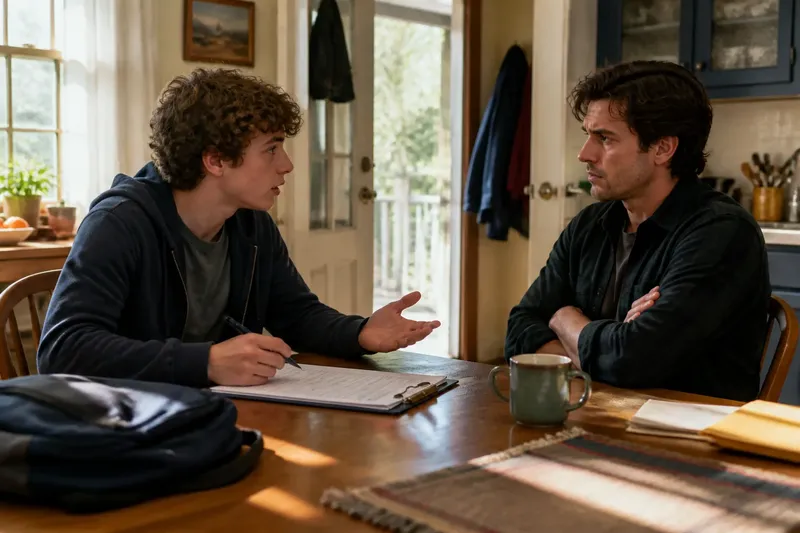
The most common mistake in a short scene is letting characters explain how they feel while nothing changes between them. The cost is a page that may sound thoughtful at the table but gives actors no clear action to pursue. A playable scene needs something to happen: a character tries to change another person’s behavior, protect a secret, or get a specific object, and the attempt alters what can happen next.
That does not mean every scene needs a surprise entrance or a dramatic accident. A quiet exchange can move sharply if one person refuses a request, a second changes tactics, and the first has to respond. The writer’s job is to make that movement visible in behavior, not merely report a mood.
Find the immediate want
Start with the character who has the clearest reason to speak. Give them a want that could be pursued during this particular scene. “Feel less lonely” is a state; “persuade my sister to stay until the cake comes out” is an attempt. The second gives an actor words to choose and gives the other character something to accept, resist, or reshape.
Make the want concrete enough to test. Could the character get a yes or a no? Could they leave with the envelope, secure an apology, or keep the door closed? If the answer is hard to imagine, the want may be too broad. Narrow it to the next small thing the character hopes to achieve.
Then ask why the character wants it now. A scene becomes more specific when the request has a reason for being made at this moment: the bus is due, the guest is at the door, or the family is about to sit down. The reason need not be announced. It can simply give the actor pressure to play.
Turn mood into behavior
Mood matters, but it does not direct the scene by itself. “They are uneasy” describes a possible quality of performance. It does not say what either person does. Try translating that note into an action: one character asks the same harmless question twice, moves a chair to block a view, or keeps offering tea so the other cannot leave.
Look for the behavior already suggested by your draft. A character who is jealous might ask for a name, compare two stories, or interrupt whenever the other person mentions a friend. A character who is ashamed might change the subject, hide a torn sleeve, or insist on doing a small task alone. These choices make an inner condition playable without requiring dialogue that names it.
Use an action verb that can be directed toward someone or something. “To charm,” “to stall,” “to corner,” and “to reassure” describe tactics. “To be sad” and “to feel awkward” describe conditions. A tactic can change when it fails, which is one reliable source of movement in a short scene.
Give resistance a shape
A want has dramatic force when something pushes back. The resistance might come from another character, a practical obstacle, or the protagonist’s own conflicting aim. It does not have to be hostile. A friend can resist by trying to help in the wrong way; a parent can refuse one request while offering a different kind of care.
Make the resistance particular. “The other character disagrees” is thin. “The other character will lend the key but will not explain why the back door must stay locked” gives the exchange a point of pressure. That detail also helps the writer avoid vague argument, where both characters repeat their positions without affecting one another.
For an invented situation, imagine a student wants an older cousin to sign a permission slip before their ride arrives. The cousin resists because the form lists an activity the student has not mentioned. The student first jokes, then offers a partial explanation; the cousin asks to see the full form. The action has shifted from getting a signature to controlling what the cousin learns, so the next line has a new task.
Shape the changing tactics
Once you have a want and resistance, sketch the scene as attempts rather than speeches. A character may ask directly, soften the request, bargain, conceal a fact, or appeal to a shared memory. The other person’s response should influence which tactic comes next. If the second character says no and the first simply repeats the same request, the scene may be standing still.
Use a quick sequence of questions while drafting:
- What does the character want before the scene ends?
- What is the first action they take to get it?
- What does the other character do that blocks or redirects that action?
- What new tactic follows from that response?
- What becomes harder, easier, or newly possible by the end?
These questions are a drafting aid, not a formula every exchange must obey. Some scenes have one strong turn; others shift through several small adjustments. What matters is that the characters listen well enough for one person’s behavior to change the other’s next move.
Choose a turning point
A short scene often needs one moment after which the original approach cannot continue. A secret is revealed, a request is withdrawn, a promise is made, or a character discovers that the other person already knew. The change can be quiet. A hand moving away from a doorknob may alter the balance more than a raised voice if the scene has prepared us to understand the gesture.
To find the turn, compare the characters’ options before and after the moment. Before, perhaps one person can pretend the conversation is casual; afterward, that cover is gone. Before, the other person can avoid choosing; afterward, silence itself becomes an answer. If the options remain exactly the same, the apparent revelation may not be doing enough dramatic work.
Do not add a twist just to make the scene feel busy. The turn should grow from the want and resistance you have already established. A new fact is useful when it changes what someone can do, what they are willing to risk, or how they interpret the other person’s actions.
Check the ending’s consequence
At the end, something should be different in the immediate situation. The character might get the object but lose trust, fail to get an answer but learn where the other person stands, or leave with a new obligation. A change in understanding can count, provided it affects the next choice rather than remaining a thought tucked inside a speech.
Read only the actions and responses, setting aside any lines that explain feelings. Can you tell what each person is trying to do? Can you point to the moment one person’s choice forces the other to adjust? If not, revise one passage so a character makes a request, blocks an attempt, offers something, or takes something away. Then let the dialogue carry the consequences.
It is not worth adding extra entrances, objects, or complications merely to create motion. A single unanswered question can supply enough resistance if each character handles it differently. The goal is not busyness; it is a chain of choices the audience can follow.
Questions about playable scenes?
Can a quiet scene still have action?
Yes. Action means an attempt to affect the situation, not physical movement or loud emotion. A character who keeps a visitor talking to delay an uncomfortable goodbye is pursuing a clear action even while both remain seated.
How do I tell mood from action?
Mood names a feeling or atmosphere, such as dread or tenderness. Action names an effort someone can make, such as hiding a letter, winning an agreement, or stopping a conversation from ending.
Does every scene need a conflict?
It needs some resistance, but not necessarily an argument. Two characters may want the same outcome for different reasons, or one may accept a request while attaching a condition that changes its meaning.
What if the character’s goal is emotional?
Translate the emotional goal into an observable attempt. Instead of trying to “feel forgiven,” a character might ask the other person to keep a shared photograph or invite them to stay for dinner.
Revise for playable action
When you revise, circle each statement that labels a feeling and ask what behavior could carry it. Underline each attempt to persuade, conceal, delay, protect, or refuse. Then check that the other character’s response changes what happens next. A scene gains direction when these actions form a cause-and-effect line, even if the setting is an ordinary kitchen and the voices stay calm.
Keep that test nearby as you write: what is this person trying to make happen, and what do they do when the first attempt fails? That question is a practical way to find playable action in a short scene. It also gives an actor something generous to work with: a choice, an obstacle, and a reason to make the next choice different.